Tell us about the job
Takes about a minute. No obligation.
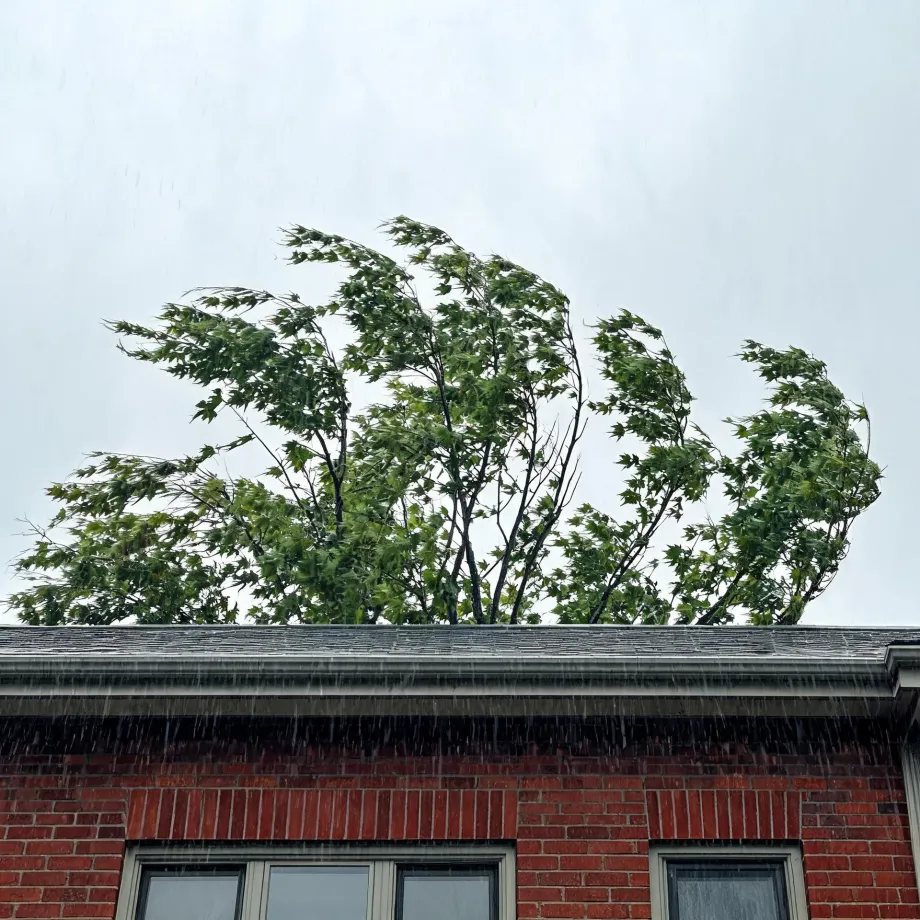
A contractor quoting a heat pump repair in King William County is not working around a system battered by relentless storms. 70 severe weather events were recorded in King William County, Virginia between 2015 and 2024. At that rate, severe weather is something this area sees, not something equipment here endures as a constant. A compressor that has given out, refrigerant that has leaked, a reversing valve that has failed: the cause is far more likely to be installation quality, deferred maintenance, or a unit that has simply run its years than any load the weather put on it. A contractor here earns their diagnosis by ruling those out first.
Half the homes in King William County, Virginia were built in 1996 or earlier (2020-2024 ACS 5-year). Heat pumps installed into houses of that vintage often went in years after the original build, which means the equipment a contractor opens today may be running on a second or third generation of replacement parts. When a repair call comes in, what the opened system reveals is whether current replacement components still match what that unit takes, or whether the repair has already hit a parts availability wall. Some heat pump lines from that era draw on supply chains that have narrowed, and a technician confirming availability before quoting saves the homeowner a second service call after a part turns out to be discontinued.
The Parts of a Heat Pump a Contractor Checks First
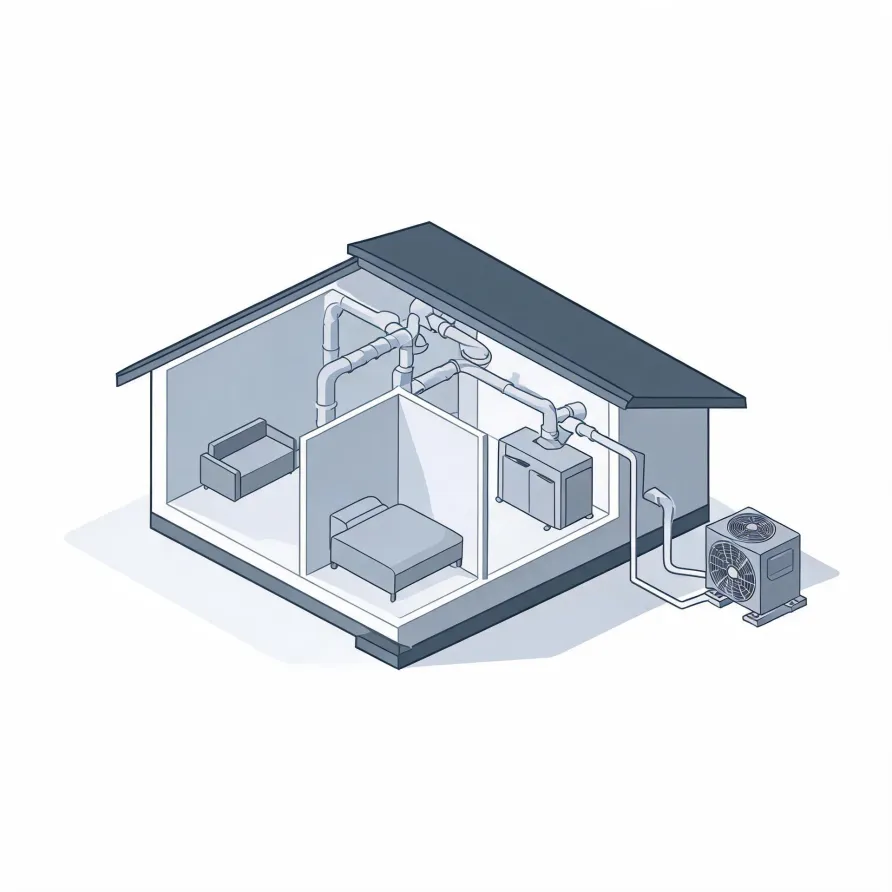
The outdoor unit sits outside the house and holds the compressor and condenser coil, which are the pieces that do the heaviest work in the system. When a heat pump stops moving heat the way it should, the compressor and that coil are where a contractor looks first. A failed compressor, a refrigerant leak at the coil, or a damaged fan motor in that cabinet will each stop the system in a different way.
Inside the house, the air handler pushes conditioned air through the home and contains the indoor coil and the blower motor. The expansion valve, which controls how refrigerant moves between the two coils, and the reversing valve, which lets the system run in both heating and cooling modes, are also points a contractor checks when the symptoms point inward.
The drawing shows a general layout of these components, and a licensed contractor determines which parts apply and what condition they are in for your specific home.
Get matched in King William CountyKing William County, by the numbers
70 severe weather events were recorded in King William County, Virginia between 2015 and 2024.
NOAA National Centers for Environmental Information, Storm Events Database, bulk CSV export, events 2015-01-01 through 2024-12-31.Half the homes in King William County, Virginia were built in 1996 or earlier (2020-2024 ACS 5-year).
U.S. Census Bureau, 2020-2024 American Community Survey 5-Year EstimatesKing William County, Virginia holds 7,730 housing units (2020-2024 ACS 5-year).
U.S. Census Bureau, 2020-2024 American Community Survey 5-Year EstimatesOwners occupy 88.9% of the occupied homes in King William County, Virginia (2020-2024 ACS 5-year).
U.S. Census Bureau, 2020-2024 American Community Survey 5-Year EstimatesCodes & Standards Governing Heat Pump Repair in King William County, Virginia2 sourced rules and standards
Licensing and Legal Requirements in King William County, Virginia
Virginia’s contractor licence classes start above $1,000: the entry class covers a single contract or project over $1,000 but less than $30,000, or less than $250,000 of work in any 12-month period, with larger classes above that.
Virginia requires a contractor licence: no person may engage in, or offer to engage in, contracting work in the Commonwealth without one.
Severe Weather Events in King William County, Year by Year
Heat pumps work hardest when conditions outside are hardest, and the wear that accumulates during those periods is what drives repair needs. How much weather stress local equipment absorbs is a King William County question, not a national one.
70 severe weather events, 2015–2024. Source: NOAA National Centers for Environmental Information, Storm Events Database.