Tell us about the job
Takes about a minute. No obligation.
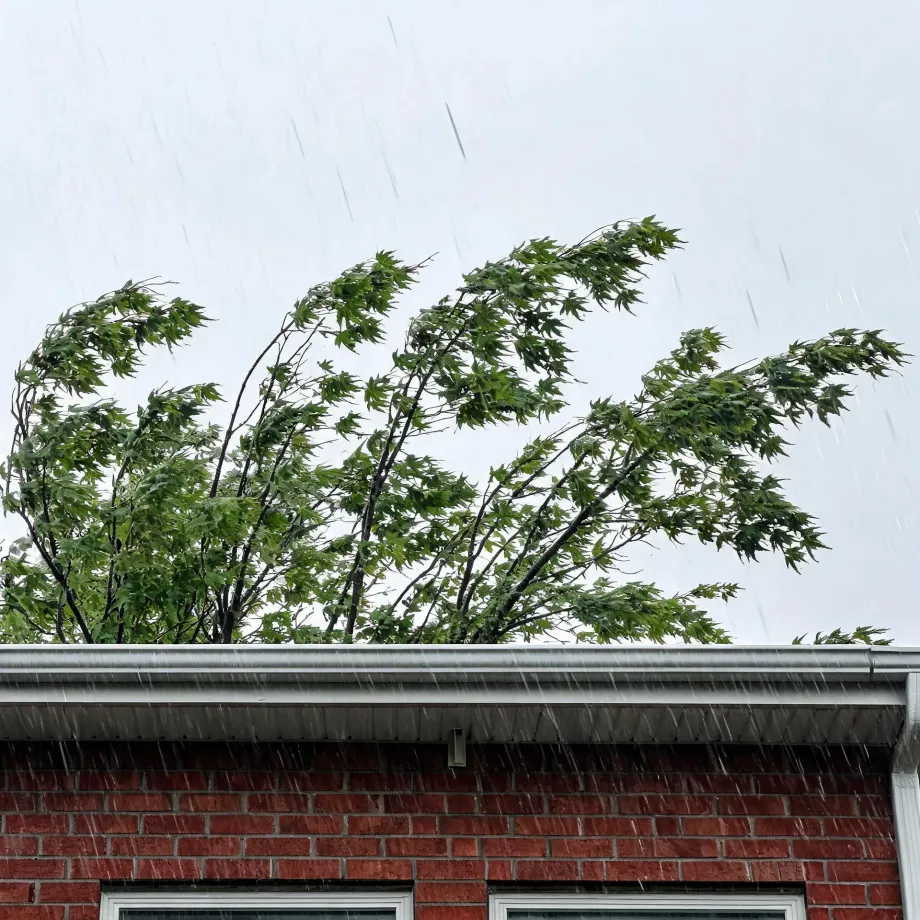
Sizing a heat pump for this county starts with understanding what the equipment will run against, not just what the house measures in square footage. 454 severe weather events were recorded in Fairfax County, Virginia between 2015 and 2024. At that rate, severe weather is part of the normal operating environment every system here works inside, season after season. A contractor quoting an install has to account for that load when selecting equipment and specifying refrigerant line runs, insulation, and electrical capacity. A unit sized to catalog minimums will be undersized for what this area actually asks of it.
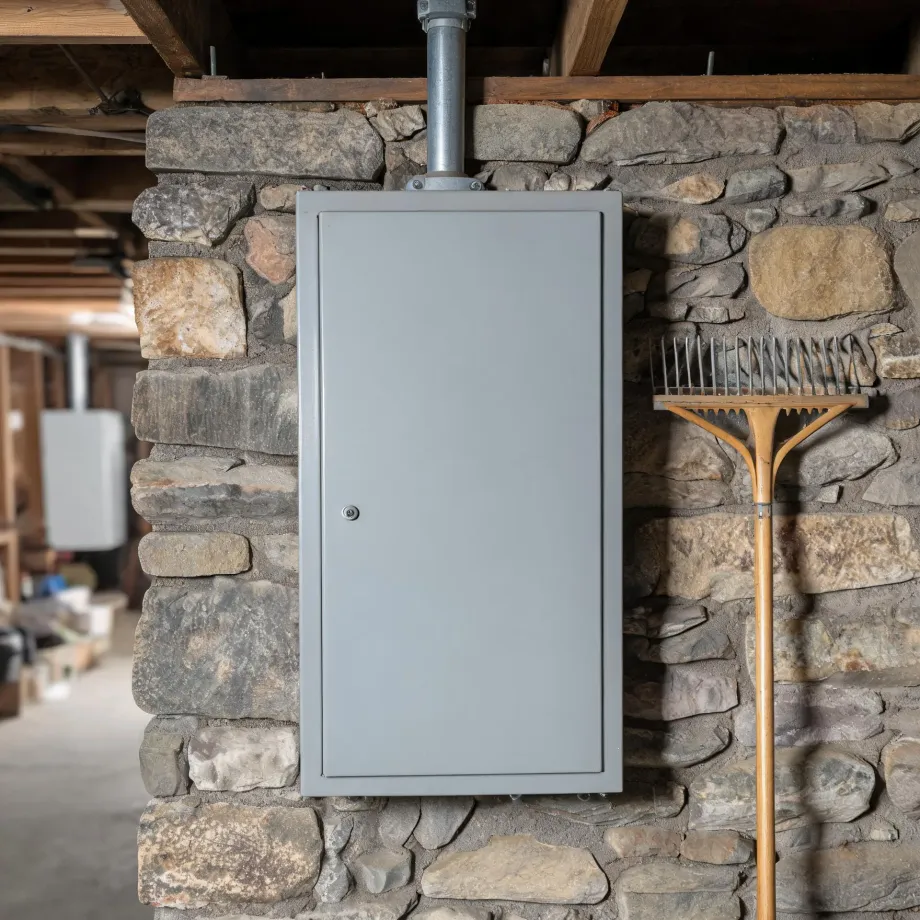
Ductwork laid down for a conventional forced-air system carries specific assumptions about static pressure and airflow that a heat pump does not share. Half the homes in Fairfax County, Virginia were built in 1983 or earlier (2020-2024 ACS 5-year). A contractor quoting a heat pump in this county opens the duct system before pricing the unit, because what the existing runs can move determines whether they stay, get resized, or get replaced. Electrical service gets the same look: a panel from that era may not carry the load a modern heat pump draws without an upgrade. The equipment selection comes after those two questions are answered.
What Gets Installed With a New Heat Pump
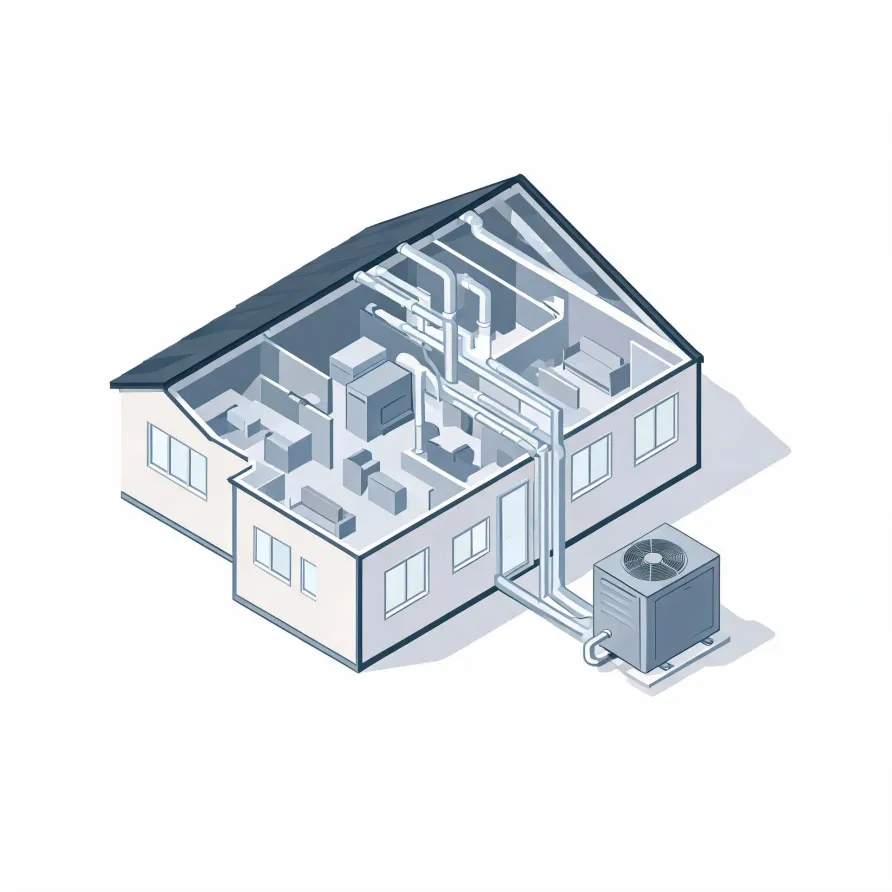
The outdoor unit is the piece a homeowner sees first, set on a pad beside the house, and it holds the compressor and the coil that exchange heat with the outside air. Inside, the air handler mounts in a utility space, a closet, or an attic, and it moves conditioned air through the home. Together these two units form the working core of the system.
A refrigerant line set runs between the outdoor unit and the air handler, carrying the fluid that links the two sides of the system. A thermostat goes on an interior wall and gives the homeowner control over the whole system. The disconnect box mounts near the outdoor unit and gives the contractor a safe shutoff point for service.
The drawing shows a representative layout, and a licensed contractor determines exactly what applies to this house.
Get matched in Fairfax CountyFairfax County, by the numbers
454 severe weather events were recorded in Fairfax County, Virginia between 2015 and 2024.
NOAA National Centers for Environmental Information, Storm Events Database, bulk CSV export, events 2015-01-01 through 2024-12-31.Half the homes in Fairfax County, Virginia were built in 1983 or earlier (2020-2024 ACS 5-year).
U.S. Census Bureau, 2020-2024 American Community Survey 5-Year EstimatesFairfax County, Virginia holds 430,047 housing units (2020-2024 ACS 5-year).
U.S. Census Bureau, 2020-2024 American Community Survey 5-Year EstimatesOwners occupy 68.6% of the occupied homes in Fairfax County, Virginia (2020-2024 ACS 5-year).
U.S. Census Bureau, 2020-2024 American Community Survey 5-Year EstimatesRules & Standards for Heat Pump Installation in Fairfax County, Virginia2 sourced rules and standards
Licensing and Legal Requirements in Fairfax County, Virginia
Virginia’s contractor licence classes start above $1,000: the entry class covers a single contract or project over $1,000 but less than $30,000, or less than $250,000 of work in any 12-month period, with larger classes above that.
Virginia requires a contractor licence: no person may engage in, or offer to engage in, contracting work in the Commonwealth without one.
Severe Weather Events in Fairfax County
Fairfax County weather puts real demands on heating and cooling equipment, and those demands shape what a heat pump here needs to handle over its working life. Sizing and installation decisions are local ones because the climate load is local.
454 severe weather events, 2015–2024. Source: NOAA National Centers for Environmental Information, Storm Events Database.